
Rescue Your Resolutions
by Rochelle Melander
You know as well as I do that most people fail to keep their New Year’s resolutions. And it’s not because we didn’t want to start a meditation habit, eat less, or write that book. It’s because we didn’t have a system set up to support us.
Here are five tools you can use to make sure you follow through on that resolution you set. For the purposes of this article, let’s pretend you’re one of the people who want to write a book this year. (A whopping 80 percent of people say they want to write a book someday.)
1. Choose.
One of the reasons our resolutions fail is that we have too many. When it comes to setting New Year’s goals, most people set multiple resolutions. When it comes to writing a book, many of us try to complete multiple projects at once. Choose one or two projects to work on.
Your turn: What’s your goal?
2. Make your goal achievable.
Many goals fail because they’re difficult to achieve.
Here are some examples of goals that don’t work:
- get an agent
- sell my nonfiction book
- write a novel
What’s wrong with those goals? The first two don’t work because they involve other people making decisions. This is beyond your control. Far better to have a goal constructed around practices you have control over like, “Submit my query letter to three agents a week” or “Write a pitch for my nonfiction book proposal.”
The third goal doesn’t work because it’s too big. It needs to be broken down into multiple tiny steps, like create characters, imagine setting, and construct outline.
Your turn: If you could turn your goal into a practice, what would it be?
Pro tip: This is the kind of thing we work on in the Writing Accountability Group, starting soon. Check it out here.
3. Write it down.
Psychology professor Dr. Gail Matthews did a study on goal setting and discovered that people are 42 percent more likely to achieve goals if they write them down first. Why? It helps you clarify what you want. It helps you to keep your goal in front of you, so that you are motivated to take action. It can also help you track your goal.
Your turn: Use this template to record your goal.
I will [Action] at [when and where] so that I can [goal].
Here’s an example: I will write three times a week at Show Up and Write so that I can achieve my goal of writing my memoir.
Pro Tip: Note that this goal is all about the habit: writing three times a week.
4. Connect your goal to an existing habit.
Many years ago, when I was hoping to exercise more and devoted to a daily soap opera, I made a rule: I could only watch the soap when I was on the exercise bike. It worked. This is called temptation bundling: pairing a new habit with something you love, like iced tea, hot cocoa, or sitting in a library. Habit stacking also works: writing right before or after a daily habit, like checking email or having breakfast.
Your turn: How can you use temptation bundling or habit stacking to help you write?
5. Get accountable.
I wrote more this year because I have multiple sources of accountability, including my Show Up and Write group. Many of my clients come to me because they need accountability. The Association for Talent Development did a study that showed that committing to someone that you’ll do something makes you 65 percent more likely you’ll achieve your goal but having a specific accountability appointment with someone increases your chance of success to 95 percent.
Need support in achieving your goal?
Sign up for a consult: https://writenowcoach.com/consultation/
Join Show Up and Write for body doubling and accountability.

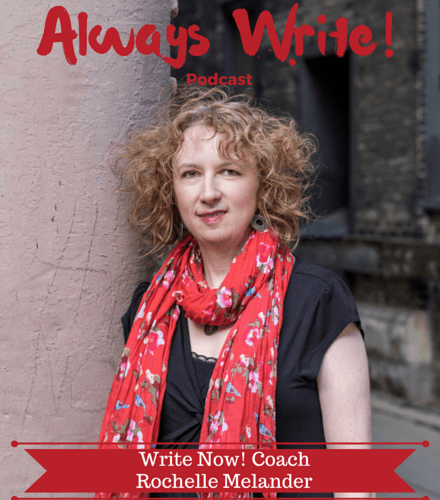
Write Now! Coach Rochelle Melander is an author and ADHD-trained professional certified coach. She helps wildly creative people get stuff done. From writing and publishing books to finishing that work project–she’s got you covered. If you’re struggling to start or finish a project, connect with Rochelle to create a personalized plan for overcoming procrastination, dealing with distraction, and staying focused. Book a private consultation: https://writenowcoach.com/consultation/